Moore grew up in a Catholic household; his father ran a grocery and spirit business. He attended Trinity College Dublin, where he joined a gifted student circle that included Robert Emmet, and afterward went to London to study law at the Middle Temple. Literature soon displaced his legal ambitions. His translation of the Odes of Anacreon (1800) and the lightly scandalous Poetical Works of the Late Thomas Little (1801) brought him into fashionable literary society.
In 1803 Moore was appointed registrar to the Admiralty Court in Bermuda, a post that took him to North America and supplied material for Epistles, Odes, and Other Poems (1806). A harsh review by Francis Jeffrey led Moore to challenge him to a duel, though no one was hurt. The first series of Irish Melodies appeared in 1808, with music arranged by John Stevenson, and the project continued for decades; its blend of sentimental verse and traditional Irish airs gave him his most enduring songs. He married Elizabeth Dyke in 1811. In 1817 he published Lalla Rookh, an Oriental romance in verse that became a huge commercial success, and in 1818 The Fudge Family in Paris showed his gift for topical satire.
Financial trouble caused by a deputy in his Bermuda post sent Moore abroad in 1819; while in Venice he visited Lord Byron. Byron entrusted him with his memoirs, which Moore and publisher John Murray later burned after Byron's death, a decision that provoked criticism. Moore nonetheless produced Letters and Journals of Lord Byron (1830), a widely read biography. Back in England, he wrote The History of Ireland (1835 - 46). His final years were saddened by the deaths of all five of his children, and he died at Sloperton Cottage in Wiltshire in 1852.
Thomas Moore was born on May 28, 1779 in Dublin, Leinster, Ireland. In Cardology (Destiny Cards), May 28, 1779 corresponds to the Four of Clubs, making the Four of Clubs his Birth Card.
In numerology, the name adds another layer to the birth-date profile. The letters of a person’s name are used to explore inner motivation, personality, expression, and the qualities they bring into relationships and everyday life. Explore how his original name Thomas Moore influences his life and personality.
Thomas Moore Quotes
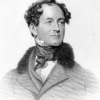
“It is only through mystery and madness that the soul is revealed.” - Thomas Moore
Famous Gemini People
Discover famous Gemini people, from actors and musicians to writers, athletes, and historical figures. Explore their birthdays and biographies, and see who shares the Gemini zodiac sign.